



Western Tidewater Community Service Board Blog


Why is mental Health Awareness Important?
46% of Americans will meet the criteria for a diagnosable mental health condition at some point in their life. May is mental health awareness month, find out why it is important here.

Common Mental Health Comorbidities That Autistic Adults Have: Why Therapy Is Important
Symptoms of mental health conditions often go untreated in adult autistics, as they are unrecognized as separate conditions and are falsely attributed to what autism “looks like.” Some professionals refuse to counsel autistic adults with mental health conditions due to their lack of training and experience with autism. Despite the prevalence of mental health conditions, it can be difficult for an autistic adult to find affordable and quality mental health care.

Treating Alcohol Use Disorder in Adults, Teens, and People With Intellectual or Developmental Disorders: Why Awareness Matters
Alcohol use is something that’s become so ingrained in our culture – movies and tv portray alcohol use, especially teen alcohol use, as something common and expected. And while alcohol is completely legal for adults 21 and over in the U.S., it’s ironically one of the more dangerous substances that people use.

The Importance of Finding a Therapist That Understands Neurodiversity
Neurodiverse people, like people who have autism or ADHD, respond differently to life events and manage stress in different ways, compared to neurotypical people. When your therapist understands these differences, they will adjust their methods accordingly. They will give you intervention techniques tailored to neurodiverse needs.
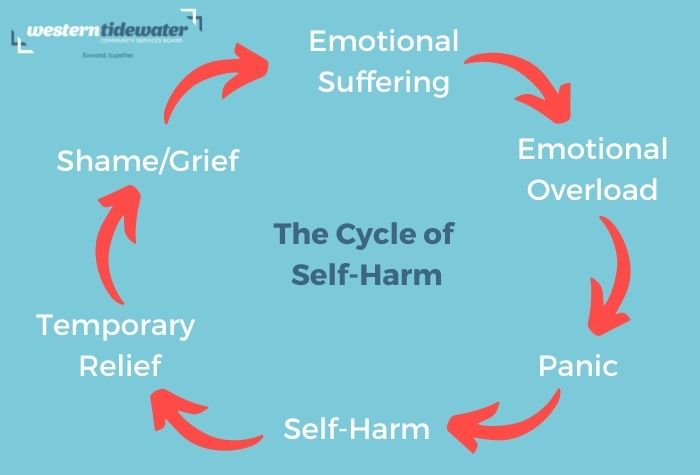
The Cycle of Self-Harming
This blog post was written by Jessica Schwartz It can be terrifying when someone we know is hurting themselves. Self-harm is usually a response to overwhelming emotion – most commonly anger or sadness – although it is also sometimes used to combat lack of emotion or...

Self-Harm is Not Always Visible: Emotional Self-Harm through Damaging Coping Mechanisms
We all have an inner critic. It helps us to recognize when we have done something wrong, and when we need to make things right. Some of us have an inner critic that is much harsher than others, and typically this is formed early in life from the things that we hear or experience as we are growing up.

5 Reasons People Self-Harm and How to Help
People use self-harm as an outlet for overpowering feelings. They may be experiencing feelings of guilt, shame, loneliness, anxiety, sadness, or even anger. Self-harm can be different for everyone, but there are five common reasons people self-harm.
The Truth About Self-Harm
There is a lot of stigma around self-harm because of the lack of understanding around it. Some people might think that self-harm is a mental illness, or that it’s simply an attention-seeking behavior. Others might not know anything at all about or might not understand why someone would self-harm. For them, finding out that a loved one is self-harming might be especially upsetting and confusing.

Supporting the Mental Health of Our Family Members
How to support your family member that has been diagnosed with a mental illness is not always clear and can be confusing, especially when muddled with emotion. In this blog, we go over some ways you can support your family member with mental illness and some things you should avoid.

Postpartum Depression and Motherhood: Overcoming the Guilt and Shame
As a new mother, you’re going through so many changes – it’s no wonder you might not feel like yourself. Feelings of sadness after giving birth are completely normal, but if your feelings of depression, guilt, or shame are severe or last longer than two weeks, you might be suffering from Postpartum Depression. However, there are ways you can help yourself, your new baby, and you family.
Employee Portal
The WTCSB Employee Portal is the one-stop for staff communication, information sharing, WTCSB policy information, downloadable forms, and more. This area is reserved for employees of WTCSB only.
WTCSB Job Board
Become a part of a community that cares. As a whole, WTCSB strives to value staff, support diversity, and promote excellence within. We are proud to be an equal opportunity employer.
Who We Are
Western Tidewater CSB is the leading authority in mental health and developmental services in Franklin, Suffolk, Isle of Wight County, and Southampton County. Learn more about what truly sets us apart.
